Imagine this — a potential customer shows strong interest in your product. You promise to call them back but forget. The lead goes cold, and your competitor closes the deal.
This situation is extremely common in businesses that don’t use a CRM.
Today’s customers expect quick responses and seamless experiences. Managing leads through Excel sheets is no longer practical. That is why CRM software has become an essential asset for every modern business.
Let’s understand in simple terms what CRM is and how it helps your business manage sales more effectively.
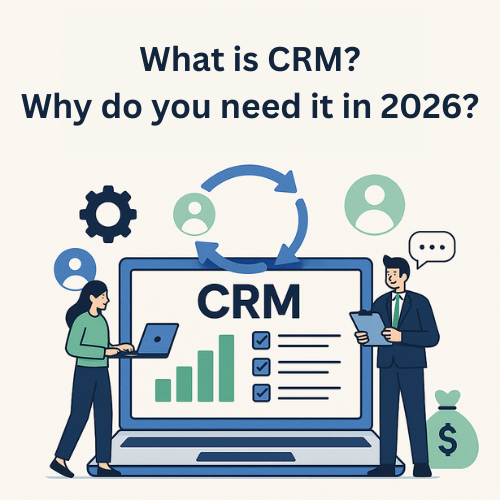
What is CRM?
CRM stands for Customer Relationship Management.
It is a system that helps businesses store customer information, manage leads, and convert prospects into clients — all in one place.
Instead of juggling multiple Excel sheets, emails, WhatsApp chats, and memory-based follow-ups, a CRM provides a single, organized dashboard where everything is easily accessible.
Think of a customized CRM as your sales assistant — one that never forgets a follow-up and always reminds you what needs to be done next.
How Does a CRM Help a Business Grow?
Every time a potential customer fills out a lead form, calls your sales team, sends a WhatsApp message, or replies to an email, the CRM captures that data automatically.
It tells you:
- Who the customer is
- What they are looking for
- When to follow up
- Which deals are most likely to close
Why CRM Is No Longer Optional in 2026
1. Customers Want Fast and Personalized Responses
Customers don’t like repeating their problems. They expect businesses to remember their preferences and history.
With a CRM, you can:
- Address customers by name
- Understand past interactions
- Offer relevant solutions
This builds trust and ultimately drives higher sales.
2. Excel Can’t Handle Modern Sales
Excel works when you have a limited number of leads, but it becomes inefficient as your business scales.
Common problems with Excel:
- Missed follow-ups
- Data duplication
- Zero team visibility
A CRM eliminates these issues through automation and real-time updates.
3. Sales Automation Saves Time and Money
In 2026, spending time on repetitive tasks slows business growth.
A CRM automates:
- Lead assignment
- Follow-up reminders
- Email and WhatsApp messages
- Sales updates
Your team spends less time managing data and more time closing deals.
4. Clear Sales Pipeline, Better Decisions
A CRM gives you complete visibility into your sales process.
It shows:
- Which deals are hot
- Which leads need attention
- Team performance
Instead of guessing, you make informed decisions — because in the digital era, data beats assumptions.
5. All Customer Interactions in One Place
Customers connect with businesses through multiple channels like social media, WhatsApp, calls, and email.
A CRM centralizes these conversations so that:
- Nothing gets missed
- Customers receive consistent responses
- Teams collaborate efficiently
This enhances customer experience and increases overall sales.
6. Higher Customer Retention
Acquiring new customers is expensive, while retaining existing ones is far more profitable.
A CRM helps you:
- Track the customer lifecycle
- Maintain timely follow-ups
- Provide proactive support
Happy customers stay longer and spend more.
7. Increased Team Productivity
With a CRM in place:
- Sales teams know exactly what to do next
- Managers can easily track performance
- Tasks are assigned automatically
This removes confusion and boosts efficiency across the organization.
8. Security and Data Control
In 2026, data security is more critical than ever.
CRM platforms offer:
- Secure cloud storage
- Role-based access
- Reliable data backups
This makes them significantly safer than spreadsheets or manual records.
Who Should Use a CRM?
CRM is not just for large enterprises. It is equally valuable for:
- Startups
- Small and medium-sized businesses
- Service providers
- Growing sales teams
If your business interacts with customers, you need a CRM.
In modern business, organized data, fast communication, and strong relationships are what separate growing companies from struggling ones.